Showing posts with label selling jewelry. Show all posts

Tuesday, October 19, 2010

Working Tuesday: Etsy Listings


I spent a bit of time this weekend listing some new items in the Etsy shop. I've got quite a few things to put into the shop, but listing them is sometimes difficult. It takes time. It takes creativity. It takes having the piece in front of me to find some inspiration.

You see, writing a description isn't only about listing what the piece is made of and how long it is. It's about telling a story. Explaining the meaning. Telling how and why I gave the piece life. It's trying to share a little part of me through the pieces I make.

So have I been successful? I guess that's up to you dear reader. I guess that's up to you.

Tuesday, September 7, 2010

Working Tuesday: Selling your creations - Shows


Note: This is part 3 of a series called "Selling your creations." If you've missed parts 1 and 2, I'd encourage you to look back and catch up!

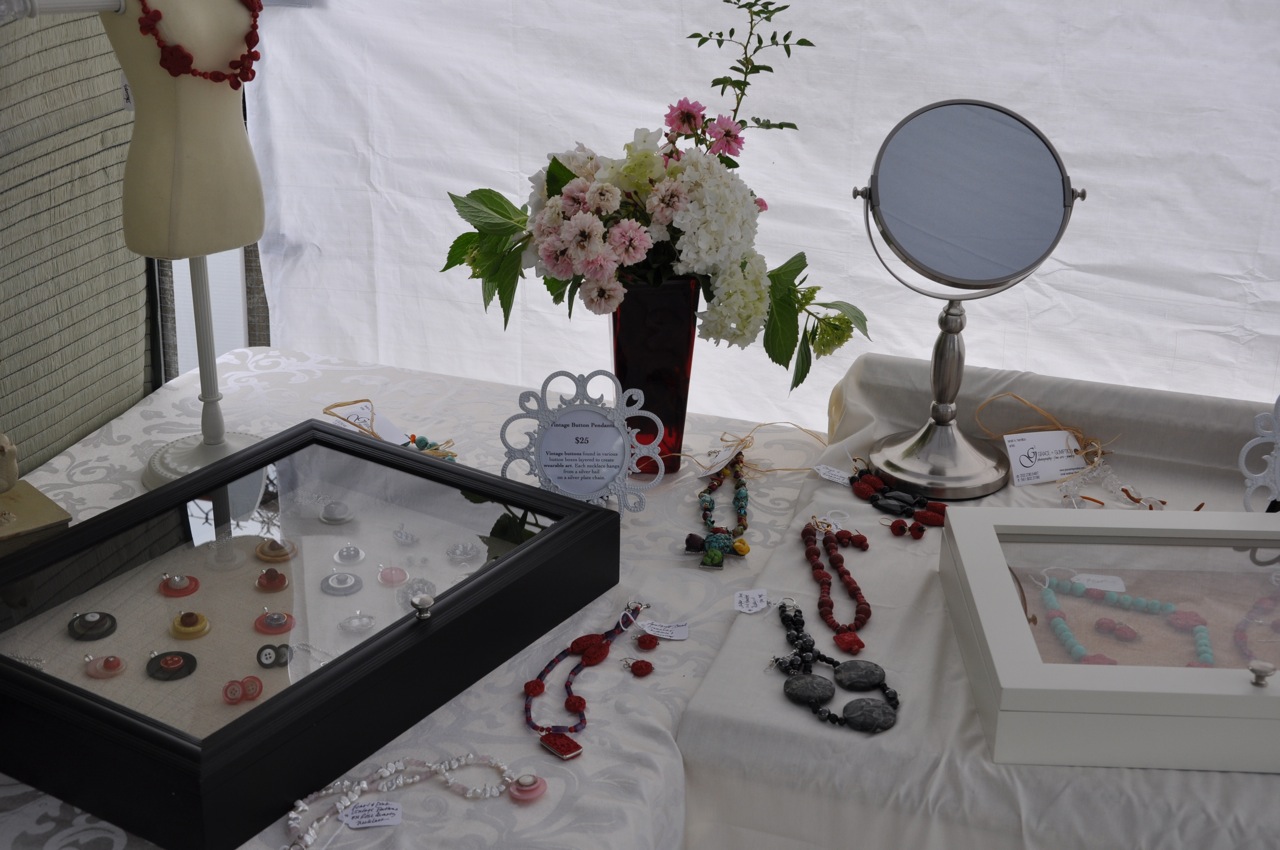
Another way to dip your toes into the marketplace is to sell your work through shows. This is where you physically go somewhere, set up a table - or sometimes an entire booth - and sell your wares directly to people.

A "show" can take many forms. Sometimes, your local mall or a regional festival will highlight artists in the community. Sometimes museums or local galleries hold shows. And sometimes there are shops that sponsor seasonal shows for artists associated with their shops. There are several street shows throughout the summer in the DC area if you search them out - you may have even been to one!

Some shows require that you go through a jurying process to check the quality of your work, and some don't. I'd suggest you stick to the juried shows because the quality is generally better overall and people come looking to spend a little more money at a higher quality show. I've taken my work to unjuried shows, set up my booth and watched while the person selling food down the way sells out while I work to sell one piece. Trust me on this. Juried is better.

It's also been my experience that any show worth doing will require a fee for you to rent a space. Although this takes from your bottom line, it generally means more money has gone into advertising and renting a good venue. And advertising and a good venue mean better customers for you. Because I don't have much in the under $10 range, I find that the more they charge to rent a space, the better the show for me.

Once you're in the "show circuit," ask other artists about other possible shows. You may have missed the deadline for this year's show, but you can ask the promoters to put you on the mailing list for next year's opportunity. Artists are generally happy to talk about what kinds of shows have been good for them and share experiences. Look for artists with products similar to yours in price and demand as that will help you get a better idea of whether your creations will sell in that type of venue.

And once you've booked a show, remember this is an opportunity to market your work in the future. Make sure you have a stack of business cards so that people who see your work can get back in touch with you. They may not have the money to buy today, but they might keep you in mind for Christmas or might want to tell friends about you. Put out a book to collect email addresses and start a mailing list. Let people who are interested in your work know where you'll be next or when you're having a sale. I've had customers come back to see me year after year just because they want to see what work I've developed from year to year - and to get something from this year's collection!

Next week, I'm hoping to talk to another artist about her experience with shows. Stay tuned for some real dirt on doing the show circuit!

Tuesday, August 31, 2010

Working Tuesday: Selling your creations - the shops

Another way to sell your creations is to get your work into shops. In my experience, there are a couple ways shops will take your work: they'll either buy it outright at a wholesale price or they'll take the work on consignment with a markup. In pricing your work for shops, it's probably a good bet there will be a 100% markup. Keep in mind, your work will still have to be reasonable enough to sell, but you'll need to make enough on the piece to make it worth your while. That's the balance you have to strike.

This is where testing the market comes in handy. If you've been selling your work, you should be getting a feel for how much people are willing to pay for your pieces. When you have this knowledge, it's much easier to price your work for sale in shops. That leaves the hardest part of this process - getting into a shop.

Here's where you'll have to do some research to find shops in your area or state that would be a good fit for your work. When I was still living in WV, I heard learned that Tamarack - the State's answer to helping regional artists sell their work - was jurying craftspeople. I found out that on a certain day the buyers were looking at artists work, packed up my samples and stood in line to see the buyer. The buyer looked at my work, selected several prototypes, discussed terms and placed an order. It took some perseverance, but the sale was worth the trouble!

Once you've identified a shop you think would be a good fit, call the shop and ask if they accept artists and ask their terms. Some shops work on a jurying process you'll have to get through. If the terms are acceptable, ask to make an appointment with their buyer. Sometimes this is the shop owner and I know from experience this can make for some great long-term relationships.

Here's where being prepared can be very important. When you meet with the buyer, make sure you have everything priced according to the terms. That way there's no confusion if the buyer wants to take certain pieces on the spot. Some buyers will give you an order for x number of pieces in x style. I've never been afraid to tell the buyer if a certain style hasn't sold well in the past. After all, if your work doesn't sell well for you and it doesn't sell for them, they might not want to sell your work in the future.
Before you leave the meeting with the buyer, make sure you set up payment terms. Don't beafraid to clearly spell out the relationship. It saves a lot of pain in the end and this is business!

One more tip on selling to shops. I've recently come across a website called Trunkt. I'm still exploring the possibilities, but it could be another opportunity to get your work into the hands of sellers!

Next week: shows.

Tuesday, August 24, 2010

Working Tuesday: Selling your creations


You've found your passion. Maybe it's gluing bottle caps into a wreath for Christmas? Maybe it's crocheting flowers into lapel pins? Possibly hand sewing together tiny little pocket books for use as a journal? Whatever it is, it's your passion. And your passion is rapidly piling up in your living room, your spare room, in boxes under your bed? Or maybe your friends have started to ask you if you'll make them a bottle cap wreath for their doors? Then, comes the dreaded phrase, "You should SELL these!" And the idea starts to grow in your head. And you start dreaming about ways to help finance your passion rather than using up your entire $10 a week in spending money every. single. week.

Yeah, I've been there. I get it. You have that need to create. You see designs where other people see piles of tchotchkes (yes, I had to look up the spelling of that too). But you have a passion and you have to create. So what's next?

We're lucky. In this day and age, there are many options open to us online that weren't available even 10 years ago. And the easiest and best known way I've found is etsy.com. Etsy - I pronounce it et-see (like set without the s and then like what you do when you use your eyes) - makes it ridiculously easy to set up an account. They have easy to follow directions available at the site.

Before you set up an account, however, think about a couple things. Most importantly? Your name. What's in a name? Your identity. This is what gives people an idea of what you sell. It's a way to convey a feeling about who you are and what you do. It's called branding. And though this may change in the near future, you can't change your name once you've picked it. So think long and hard about your name. It'll stick with you for a while.

For me, I wanted a name that conveyed timelessness while provoking emotion. I created a list of names, passed them around to friends who knew me and my work and asked them to vote on the name they thought fit me best. I even got several suggestions that were great. It's like doing market research without paying for a fancy focus group. I decided on the word Swoon because I like what it conveys - a flair for the dramatic, a bit of romance and - I admit it - it's also the name of an Imogen Heap song so the word was top of mind. And if Immi is using it, it's got to be cool, right?? Studios was both easy and difficult. We tried "designs" or "creations" - one was taken and another didn't fit. I ended up with the alliteration of Swoon Studio, that when I looked for the URL, it was taken. And thus Swoon Studios was born.

In the next couple weeks, I'll focus on the process of how and where you can start to sell your creations. In the meantime, start thinking about your name!

*Non-Swoon photos property of NewPrehistory, TheBroochBoutique and Zipper8Design, all etsy.com sellers. Click on the pictures to see their shops!